
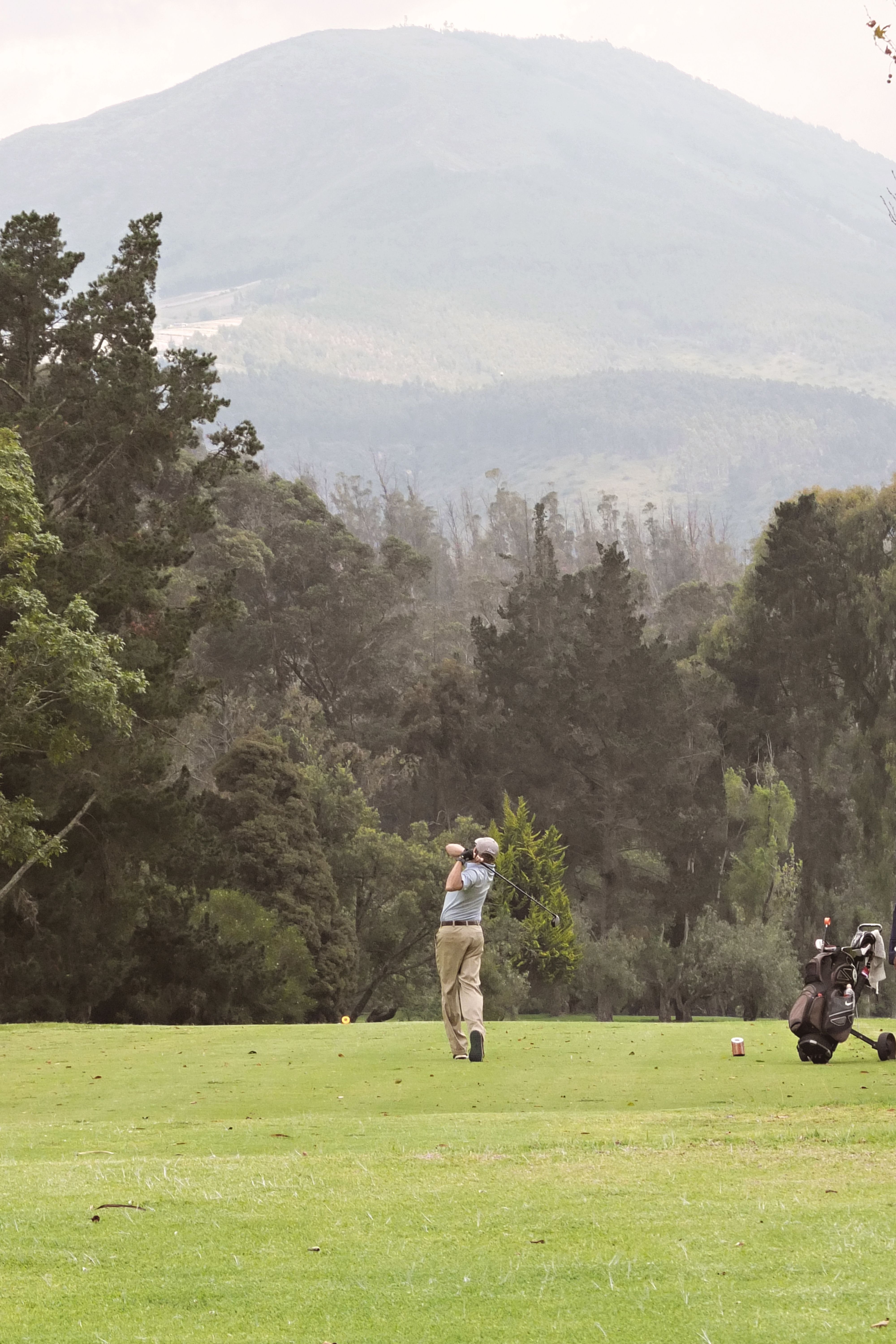
Before you hit your first drive on Saturday morning, you've probably already played the round once.
Maybe you've thought about the opening tee shot while driving to the course. Maybe you've imagined finally carrying that fairway bunker you've always come up short of, or pictured yourself walking off the eighteenth green after one of your best rounds of the year. Most golfers dismiss these thoughts as harmless daydreams, something to occupy the drive to the course.
What if they're actually part of your practice?
One of the most fascinating discoveries in neuroscience is that the brain responds to vivid mental rehearsal in surprisingly powerful ways. Studies have shown that simply imagining repeated muscular contractions can lead to measurable increases in strength, even without physically moving the muscle. The improvements aren't as great as physical training, but they demonstrate something remarkable: the brain is learning through mental rehearsal alone. Dr. Joe Dispenza discusses this research in You Are the Placebo, using it to illustrate how focused visualization can influence both the brain and the body.
Golf may be one of the sports where this matters most.
Unlike basketball or football, golf gives us time. Before nearly every shot, we're given twenty or thirty seconds to think. During that time, our minds are already creating a picture of what's about to happen. The question isn't whether we visualize. It's what we're choosing to visualize.
Too often, we rehearse failure without realizing it.
"Don't hit it in the water." "Don't leave this bunker shot in the sand." "Just don't slice this one."
The mind has a difficult time creating pictures from negatives. Instead of imagining what we don't want, it often builds an image of the very outcome we're trying to avoid. Before we've even started the swing, we've already rehearsed the wrong shot.
The Night Before Routine
Over the last few years, I've developed a routine that has become one of the most valuable parts of my preparation — and interestingly enough, it never involves hitting a golf ball.
The night before a round, I'll open the GPS app on my phone and look at every hole I'll be playing that day. One by one, I mentally play the course before I ever arrive. I visualize the tee shot, the approach, and the decisions I'll need to make if everything goes according to plan.
I don't imagine perfection. I'm not picturing every drive splitting the exact center of the fairway or every iron finishing three feet from the hole. Golf simply doesn't work that way. Instead, I visualize the areas where I want each shot to finish. I picture a drive ending on the right side of the fairway to open up the angle into the green. I imagine an approach landing safely below the hole rather than attacking a difficult pin. On a long par three, I picture the middle of the putting surface instead of chasing a tucked flag.
By the time I stand on the first tee, something feels different.
The course already feels familiar. I've already walked each fairway in my mind. I've already made strategic decisions. I've already experienced what it feels like to hit committed golf shots into the areas I want to play from. When those situations appear during the round, they don't feel completely new — because my mind has already rehearsed them.
I've found that this simple exercise has helped me tremendously, not because it guarantees better swings, but because it changes the way I approach the course. Instead of reacting to each hole as I arrive, I feel like I'm following a plan that was created long before the round began.
What Visualization Actually Does
Maybe that's the real power of visualization. It isn't about predicting the future or convincing yourself that every shot will be perfect. It's about creating familiarity. The more familiar a situation feels, the calmer your mind becomes — and calm minds almost always make better decisions than anxious ones.
I don't believe visualization is magic. It won't replace good mechanics or hours spent practicing your short game. But I do believe it changes something equally important: your expectation. When you've mentally rehearsed success often enough, the golf course begins to feel less intimidating. The tee shot doesn't feel like a test. The difficult approach doesn't feel unfamiliar. Instead, each shot feels like something you've already experienced once before.
Perhaps that's why the best golfers in the world spend so much time seeing the shot before they ever swing the club. They're not hoping something good will happen. They're preparing their minds for it.
The next time you have a tee time, don't wait until you arrive at the first hole to begin your round. Open the course map the night before. Play every hole in your mind. Picture where you want your ball to finish, the clubs you'll likely choose, and the decisions you'll make along the way.
Then, when you finally place your ball on the first tee, it won't feel like the beginning of your round.
It will feel like you've already been there.
Today's Lesson
Your mind is always rehearsing something. Before every round, choose to rehearse confidence, commitment, and smart decisions — rather than fear and uncertainty.