
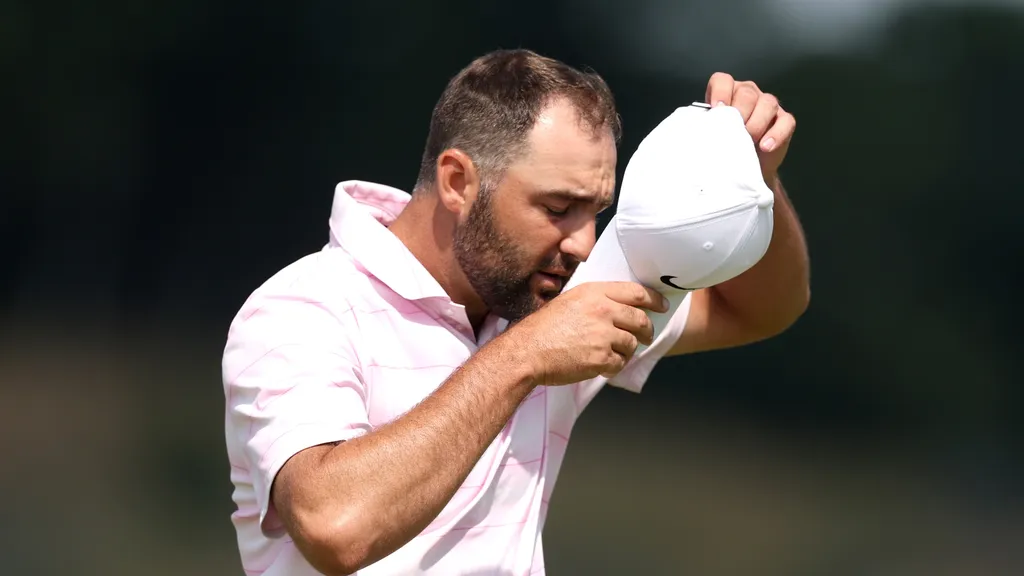
For nearly four years, Scottie Scheffler walked onto every first tee carrying more than his golf bag.
He carried a streak.
Seventy-eight consecutive cuts made. Every tournament brought another quiet reminder that the streak was still alive, and every Friday afternoon came with one more thing to protect. Whether he consciously thought about it or not, the streak had become part of every week he teed it up.
Then, at the Scottish Open, it ended.
Scheffler missed the cut for the first time since 2022, bringing one of the most remarkable runs of consistency in modern golf to a close. Tiger Woods' record of 142 consecutive made cuts remains untouched, a reminder of just how extraordinary both streaks really are.
Most people will see this as a setback. I'm not so sure.
Psychologists have found that when we stop pursuing a goal that has occupied our attention for a long time, our minds often recover mental resources that were quietly devoted to protecting it. It's known as goal disengagement. While the concept is usually discussed in the context of letting go of goals that are no longer attainable, there's a broader lesson that applies beautifully to golf. Sometimes the very thing we're trying to preserve becomes a burden we don't realize we're carrying.
Every golfer has experienced some version of this.
You stand on the sixteenth tee knowing you've played fourteen great holes. Suddenly, you're no longer trying to hit a fairway. You're trying not to ruin your best round. Your attention shifts from the next shot to the score you hope to protect, and without realizing it, the game becomes heavier.
Scheffler doesn't have to carry that weight anymore.
He won't answer questions about whether he'll make it seventy-nine consecutive cuts. He won't feel the quiet pressure of extending one of the greatest streaks in modern golf. That chapter has closed, leaving him with only one objective when he arrives at The Open next week: play the best golf he can.
There's something liberating about that.
Golf has a funny way of reminding us that what feels like a disappointment today can quietly become freedom tomorrow. Some of our best golf comes only after we've stopped trying to protect something — a score, a streak, a handicap, or even our own expectations. Once those burdens disappear, we're left with the game itself, and that's often where our minds perform best.
Next week, Scottie Scheffler will arrive at The Open carrying one less burden than he did this week. Everyone else will be talking about the streak that ended. I wonder if Scottie will simply feel lighter because there's finally nothing left to defend — except, of course, his Open title.
Sometimes losing something is exactly what allows us to play freely again.
Today's Lesson
The things we try hardest to protect often become the very things that hold us back. Play the shot in front of you, not the streak, score, or expectation you're trying to preserve.