
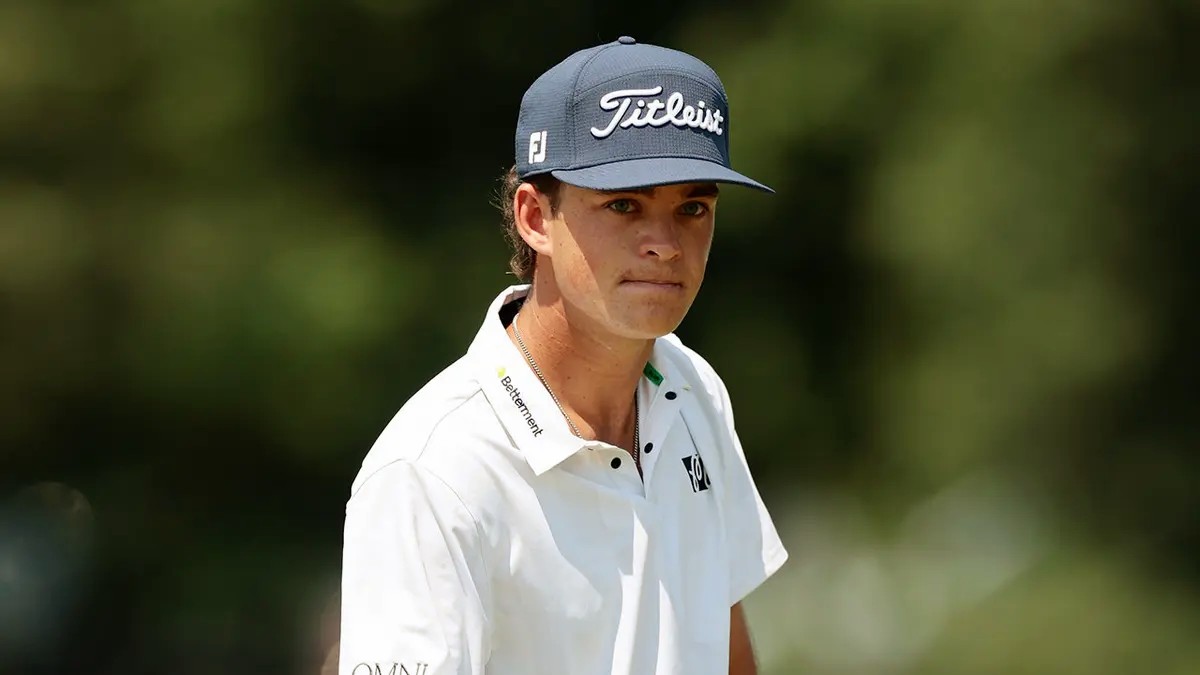
Jackson Koivun's victory on Sunday will be remembered for what happened over the final eighteen holes. At just 21 years old, he carried a three-shot lead into the final round of the 3M Open, watched Scottie Scheffler charge with a bogey-free 63, and somehow responded with a bogey-free round of his own to win in only his third start as a professional. It was the kind of performance that immediately earns words like composed, fearless, and mentally tough.
Those descriptions are certainly deserved, but I couldn't stop thinking about something Koivun had said weeks before he ever lifted a trophy.
When reporters asked him about the growing hype surrounding his future, he smiled and said, "I wish everyone would calm down a little bit."
It was an easy quote to laugh at. After all, golf is always searching for its next star, and Koivun had given people every reason to believe he might become one. He had dominated college golf, collected nearly every amateur accolade imaginable, and arrived on the PGA TOUR with expectations that most players spend years trying to earn.
But after Sunday's victory, that quote sounds much less like humility and much more like wisdom.
We often think expectations are a gift. They tell us that people believe in us. Coaches raise expectations because they recognize talent. Friends encourage us because they see potential. Fans build excitement because they enjoy imagining what someone might become. In that sense, expectations are rooted in optimism.
What we don't often acknowledge is that expectations can quietly become another opponent.
The moment people begin telling you who you're supposed to become, it's easy to feel as though every performance is either confirming their prediction or letting them down. The game slowly changes. You're no longer just trying to play good golf. You're trying to justify the story everyone else has already written about you.
Professional athletes experience this on the biggest stages, but the psychology isn't unique to elite golf. Every golfer has felt some version of it.
The first time you break 80, the next round suddenly feels different because now you're expected to do it again. Reach single digits, and every bad hole feels like evidence that maybe you never belonged there in the first place. Win your club championship, and before long you're defending a reputation instead of simply enjoying the competition. The score itself hasn't changed. What changes is the meaning we attach to it.
Psychologists have studied this for decades. Expectations have a remarkable ability to influence behavior, but they can also reshape our identity. When we begin defining ourselves by what we're expected to accomplish, every round starts feeling like a test rather than an opportunity to play. Instead of asking, What shot does this situation require? we begin asking, What will this score say about me?
Those are very different questions, and they produce very different golfers.
That's what impressed me most about Koivun on Sunday. There was no visible sense that he was trying to validate the predictions surrounding his career. As Scheffler kept making birdies and the galleries reminded him that the world's No. 1 player was coming, Koivun continued doing what golfers have always needed to do under pressure. He chose a target, committed to the shot, accepted the result, and moved on to the next challenge. His golf didn't look like someone trying to become the next great player. It looked like someone trying to hit one good shot after another.
Perhaps that's the lesson hidden inside his victory.
The strongest competitors aren't necessarily the ones who ignore expectations. That's nearly impossible. They're the ones who refuse to carry those expectations into every swing. They understand that potential is something other people talk about, while performance is built in the present moment. The future has never hit a golf shot. Only the player standing over the ball can do that.
Maybe that's what Koivun meant when he wished everyone would calm down.
Not because he lacked confidence, but because he understood that growth doesn't happen on someone else's timeline. It doesn't happen because people predict greatness or compare careers before they've begun. It happens one tournament at a time, one decision at a time, one swing at a time.
Golf has always had a fascination with finding the next great player. We rush to compare, predict, and project because it's exciting to imagine what lies ahead. But perhaps the greatest gift we can give young players isn't another headline declaring them the future of the game.
Perhaps it's allowing them the freedom to simply become who they're going to become.
Today's Lesson
Potential is a compliment. Expectation is a burden.
The next time you feel pressure to play the golfer everyone expects you to be, remember that the course has never cared about your reputation. It doesn't know your handicap, your best round, or the labels other people have given you.
It only asks one question: Can you commit to the shot that's in front of you?